US Large-Cap Craze: Investors Pour Record Billions into Vanguard S&P 500 ETF ($VOO)
- December 2, 2025
- Author - Team XALT
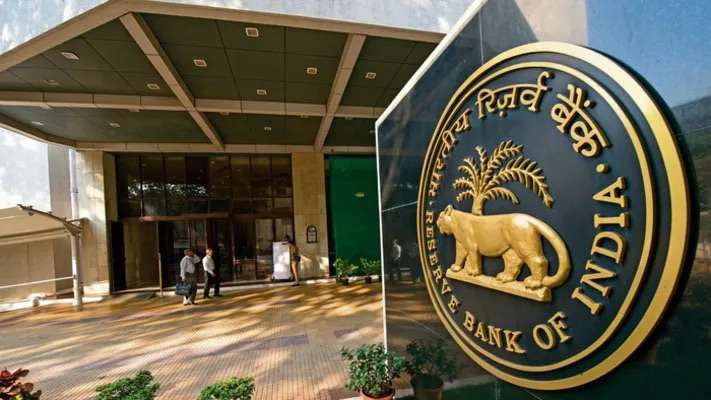
The Reserve Bank of India (RBI) has delivered a significant boost to the Indian financial markets with its latest monetary policy actions. In a move that has been widely anticipated, the Monetary Policy Committee (MPC) unanimously opted for a 25 basis point (bps) cut in the repo rate, bringing it down to 5.25%. This rate cut, the fourth in the current easing cycle, signals the RBI’s confidence in sustained disinflation and its commitment to supporting robust economic momentum. More importantly, the central bank also unveiled a substantial liquidity injection of approximately Rs 1.45 trillion (equivalent to $17.4 billion, based on a $5 billion USD/INR swap), executed through a mix of open market operations (OMO) purchases of government securities worth ₹1 trillion and a three-year USD/INR buy-sell swap of $5 billion. This proactive stance addresses prevailing stress in long-term bonds and domestic liquidity, setting a positive tone for Indian equities.
The December 2025 MPC meeting saw the RBI deliver a big positive for the markets. The unanimous rate cut surprised some market participants, especially after India recorded a robust 8.2% GDP growth in the second quarter of FY26 – a six-quarter high – amidst historically low inflation. RBI Governor Sanjay Malhotra underscored that the liquidity measures are aimed at strengthening monetary transmission and supporting market stability. This dual approach of rate reduction and liquidity infusion is expected to ease funding conditions across the financial system.
Following the RBI’s announcements, the bond market reacted positively, particularly at the short end. Indian government bond yields experienced a decline, with the benchmark 10-year yield slipping to 6.47% from 6.51%, and by over half a percent to 6.49% from its previous close of 6.53%. This drop in yields, which moves inversely to bond prices, is a direct consequence of the repo rate cut and the OMO purchases. The OMO program, in particular, is anticipated to exert downward pressure on government security yields. Such an environment is broadly positive for the financial sector, although large banks might experience some short-term pressure due to the upfront impact on their floating rate loan portfolios. However, NBFCs and small and mid-sized (SMID) banks are poised to see front-ended benefits from lower borrowing costs. Looking ahead, the yield curve could remain steep, influenced by ongoing pressures on both state and central fiscal deficits, as revenues face headwinds from GST cuts and subdued nominal GDP growth, while welfare spending limits expenditure containment.
The RBI’s measures are well-timed to support the ongoing recovery in credit growth. India’s credit growth has been running ahead of some estimates, standing at 11.3% as of mid-November 2025. The central bank’s actions are expected to alleviate concerns regarding rising loan-to-deposit ratios (LDRs), ensuring that banks are comfortably positioned to fund this growth. The surge in credit is likely to be primarily driven by the retail segment, boosted by a revival in consumption demand and ongoing RBI deregulation. Analysts are projecting further improvement in credit growth, with expectations of reaching 13.3% in FY27.
While the RBI’s decisive intervention provides immediate relief and enhances overall financial stability through liquidity injection and bond market support, underlying challenges persist. The widening Current Account Deficit (CAD) remains a key concern. India’s CAD is projected to rise to 1.7% of GDP in FY26, largely due to persistent global trade tariff pressures that keep the trade deficit elevated. However, data released by the RBI in December 2025 showed that India’s CAD narrowed sharply to $12.3 billion, or 1.3% of GDP, in Q2FY26.
Against this backdrop, the progress on the India-US trade deal is absolutely crucial for a more sustainable resolution of external sector imbalances. India and the US are actively engaged in discussions, with a US delegation visiting India in December 2025 to advance talks on the first phase of the proposed bilateral trade agreement (BTA), particularly concerning tariffs. This deal is anticipated to significantly reduce tariffs and could more than double bilateral trade to $500 billion by 2030. While there has been steady progress, the exact timeline for its completion remains uncertain, with some analysts assigning a 70% probability for a deal in 2026.
Given the RBI’s supportive stance, we remain constructive on Indian equities. The best way to capitalize on this environment is by focusing on specific sectors:
1. NBFCs (Non-Banking Financial Companies): These entities are set to benefit significantly from improved funding conditions and lower costs of funds (CoF). The rate cut and liquidity injection are expected to boost their Net Interest Margins (NIMs). Their exposure to floating-rate loans is also generally more limited compared to traditional banks, which can be advantageous in a falling rate environment. We maintain a positive outlook on players like Bajaj Finserv and Shriram Finance. Bajaj Finserv has already demonstrated strong market resilience and outperformance in 2025. Shriram Finance also shows robust financial metrics, including healthy Return on Equity and profit growth.
2. SMID Banks (Small and Mid-cap Banks): These banks are well-positioned to ride the near-term loan growth recovery momentum. They stand to gain disproportionately from monetary easing, which helps their liabilities franchise through lower cost of deposits and borrowings. Recent capital infusions by foreign banks and Private Equity firms further strengthen their capital bases and provide the comfort of anchor shareholders. IDFC First Bank, for instance, has transformed into a retail-focused lender and is actively pursuing growth.
3. Autos: The auto sector is highly sensitive to interest rates, and lower borrowing costs for consumers are likely to stimulate demand for vehicle loans, leading to a pickup in sales. Auto stocks have already seen gains following the repo rate cut.
In conclusion, the RBI’s latest monetary policy decisions represent a timely and potent intervention to bolster liquidity and stabilize bond markets. This, coupled with positive signals for credit growth, paves the way for a favorable environment for Indian equities, particularly for strategically positioned NBFCs, SMID banks, and auto companies. Investors should watch for further developments on the India-US trade deal, which remains a critical factor for long-term external sector stability.