India’s Exceptional Underperformance in 2025: A 30-Year Anomaly likely to correct itself!
- December 31, 2025
- Author - Niraj Shah
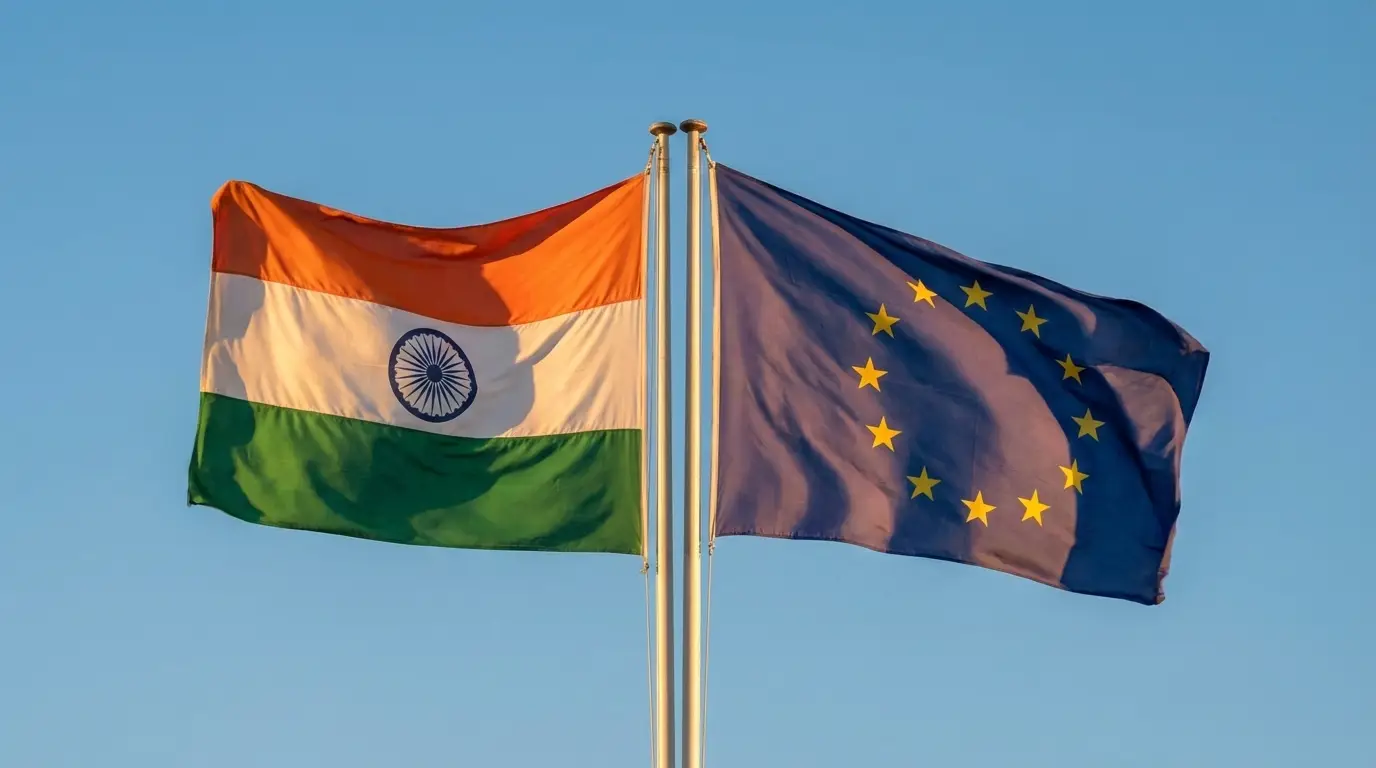
The India-EU free trade agreement was a phantom for nearly two decades, a deal everyone discussed but no one priced into assets. That era is over. India and the European Union have concluded a landmark pact that the European Commission calls “the most ambitious trade opening India has ever granted.” For investors, this is not a headline to be traded; it is a structural shift to be underwritten in allocation models for the next decade.
The agreement’s power lies less in its immediate impact and more in how it reshapes the investment landscape by the early 2030s. Framed by New Delhi as a strategic hedge against unpredictable US trade policy, the deal is set to double EU goods exports to India by 2032 and save European firms €4 billion annually in duties. With tariffs eliminated on 96.6 percent of goods, this is a fundamental repricing of one of the world’s most important trade corridors.
The contours of the deal are remarkably clear. On the European side, the winners are obvious. Automakers gain a quota of 250,000 vehicles, six times what the UK secured, with duties on cars and EVs phasing down over five to ten years. This grants privileged access to one of the world’s fastest-growing auto markets. European industrials and agri-food producers will also see significant margin uplift.
On the Indian side, exporters of textiles, gems, pharmaceuticals, and chemicals are poised for a major boost, with economists estimating a potential $50 billion rise in exports to the EU by 2031. Zero-duty access for apparel and jewellery exporters makes them clear victors. However, the deal creates domestic challenges. Indian automakers and liquor companies will face intense competition from cheaper, high-quality European imports, creating a clear divergence between India’s domestic-facing and export-oriented sectors.
Initial commentary has split between triumphalism and caution, with many noting the slow, phased implementation. The market’s initial shrug, however, misses three crucial points from an investment perspective.
1. Visibility is an Asset: The “slow burn” nature of the deal is a feature, not a bug. For capital-intensive sectors, a predictable, ten-year tariff glide path is a powerful catalyst for capex and M&A. This long-term visibility will drive earnings growth long before the full trade volumes materialize.
2. It’s a Relative Game: The story isn’t just about the absolute growth in EU-India trade. It’s about the relative repricing of India as a policy-stable manufacturing hub. As global firms diversify supply chains away from China, this deal makes India a uniquely attractive destination for EU-centric production.
3. Don’t Forget Services: While goods get the headlines, the pact includes significant liberalisation in services like finance and maritime logistics. This regulatory clarity provides a powerful, if harder to quantify, tailwind for investors in India’s services economy.
This is not a trade for the next quarter; it is a core thesis for the next decade. The Atlantic Council rightly warns against overhyping the immediate impact, but for patient capital, the path forward is clear.
Equities: The market’s indifference is an entry point. In India, build structural overweights in export-oriented manufacturers in pharmaceuticals, textiles, and chemicals. Reassess domestic auto and consumer names that will face margin pressure. In Europe, favour high-quality industrials and automakers with clear strategies to leverage their newfound access to the Indian market.
Fixed Income & Alternatives: The deal strengthens India’s external accounts, supporting tighter credit spreads and a lower risk premium on Indian debt over time. For private capital, the political anchoring and policy predictability create a fertile ground for long-term, illiquid investments in Indian infrastructure, logistics, and manufacturing.
The India-EU FTA is a long-duration policy asset. It solidifies India’s role as a core strategic allocation and deepens Europe’s exposure to Asian growth. The deal won’t transform global trade overnight, but it materially improves the odds that India and Europe will be two of the most rewarding places to be invested for the remainder of the decade.